
Losing weight through walking can be an effective and sustainable method for many people. Walking is a low-impact exercise that is easy to incorporate into daily routines, and it can help burn calories and boost metabolism. Here’s how to effectively use walking as a strategy to lose weight:
1. Set a Goal:
- Define Your Target: Determine how much weight you want to lose and set a realistic goal. Aim for a steady and gradual weight loss of about 1-2 pounds per week.
- Set Walking Targets: Decide on a target number of steps per day or a total duration of walking each week.
2. Start Slowly:
- Gradual Increase: If you’re not used to regular walking, start with shorter walks and gradually increase your distance and pace over time. This helps prevent injury and allows your body to adjust.
3. Establish a Routine:
- Consistency is Key: Schedule regular walking sessions throughout the week. Aim for at least 30 minutes of brisk walking most days of the week.
- Morning Walks: Morning walks can be especially effective for weight loss as they kickstart your metabolism for the day.
4. Increase Intensity:
- Incorporate Intervals: Intervals of faster walking (like power walking) followed by slower recovery walks can boost calorie burn and cardiovascular fitness.
- Add Inclines: Walking uphill or on varied terrain can increase the intensity and calorie burn.
5. Monitor Your Progress:
- Use a Pedometer or Fitness Tracker: Track your daily steps or distance covered. Many smartphones have built-in step counters or use wearable fitness trackers.
- Keep a Walking Journal: Note down your progress, how you feel, and any improvements over time.
6. Combine with a Balanced Diet:
- Eat Mindfully: Focus on a balanced diet with plenty of fruits, vegetables, lean proteins, and whole grains. Avoid excessive sugary or processed foods.
- Stay Hydrated: Drink plenty of water throughout the day, especially before and after your walks.
7. Stay Motivated:
- Mix It Up: Vary your walking routes and explore new areas to keep things interesting.
- Find a Walking Buddy: Walking with a friend or joining a walking group can make it more enjoyable and provide accountability.
- Celebrate Milestones: Reward yourself for achieving walking milestones or weight loss goals (but not with food rewards).
8. Get Adequate Rest:
- Allow for Recovery: Ensure you get enough rest and sleep to support your body’s recovery and muscle repair.
9. Consult a Professional:
- Seek Guidance: If you have any health concerns or specific weight loss goals, consult with a healthcare professional or fitness trainer before starting a new exercise regimen.
10. Be Patient and Persistent:
- Stay Committed: Sustainable weight loss takes time. Be patient and consistent with your walking routine, and you’ll start to see results over weeks and months.
Walking for weight loss is a natural and accessible method that can be adapted to your fitness level and schedule. Combine it with healthy eating habits and other lifestyle changes for best results. Remember, the key is to find an approach that works for you and that you can maintain in the long run.
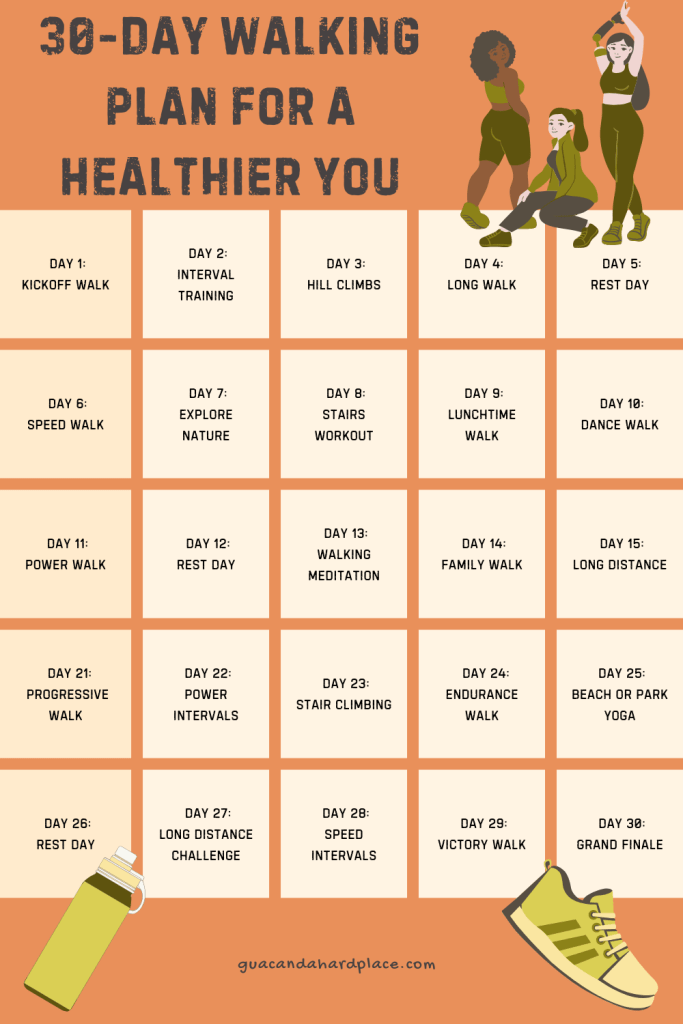
30-Day Walking Plan
Creating a 30-day walking plan to lose weight involves progressively increasing your walking duration, intensity, and consistency over the course of a month. Here’s a structured plan you can follow:

Free Printable 30-Day Walking Plan
Week 1: Building a Foundation
- Day 1-3: Start with a 20-minute walk at a moderate pace (brisk enough to elevate your heart rate slightly).
- Day 4-7: Increase to a 30-minute walk each day. Try to maintain a consistent pace throughout.
Week 2: Stepping Up Intensity
- Day 8-10: Incorporate intervals into your walks. Walk at a brisk pace for 3 minutes, then slow down to a comfortable pace for 1 minute. Repeat this cycle for 30 minutes.
- Day 11-14: Increase your daily walk to 40 minutes. Continue with interval training.
Week 3: Increasing Duration
- Day 15-17: Walk for 45 minutes each day, incorporating hills or inclines if possible.
- Day 18-21: Extend your walk to 50 minutes. Focus on maintaining a steady pace.
Week 4: Final Push
- Day 22-24: Walk for 55 minutes. This could include a combination of brisk walking and uphill walking.
- Day 25-27: Aim for a 60-minute walk. You can split this into two 30-minute sessions if needed.
- Day 28-30: In the final days, challenge yourself with a 60-75 minute walk at a moderate pace, aiming to cover more distance.
Tips for Success:
- Stay Hydrated: Drink water before, during, and after your walks.
- Proper Footwear: Invest in comfortable and supportive walking shoes.
- Listen to Your Body: If you feel fatigued or experience discomfort, take a rest day or reduce intensity.
- Stretch: Stretch your muscles before and after each walk to prevent injury and improve flexibility.
- Monitor Progress: Keep track of your daily walks and celebrate milestones along the way.
Additional Recommendations:
- Healthy Eating: Combine your walking plan with a balanced diet rich in whole foods.
- Strength Training: Consider incorporating strength training exercises to build lean muscle mass and boost metabolism.
- Rest and Recovery: Allow your body adequate time to recover between workouts.
Adjust this plan based on your fitness level and any health considerations. Always consult with a healthcare professional before starting a new exercise routine, especially if you have underlying health conditions.




 Between a Guac and a Hard Place
Leave a comment